
The topic Stop running five separate apps when this open-source alternative does it all is currently the subject of lively discussion — readers and analysts are keeping a close eye on developments.
This is taking place in a dynamic environment: companies’ decisions and competitors’ reactions can quickly change the picture.
Working from home requires constant communication, and with constant communication comes a ton of different communication apps. Slack, Asana, Discord, and anything in between are typically open from at least 9 to 5 throughout the workday, and paging through native apps can get a little annoying after a while. That’s why I went on a search to consolidate them, and walked away with a fantastic solution.
Rather than having a ton of different native apps running in the background on my PC, sapping away my RAM and CPU, I started using a program that would consolidate them into an all-in-one package, and accessing them at any given time has become a breeze.
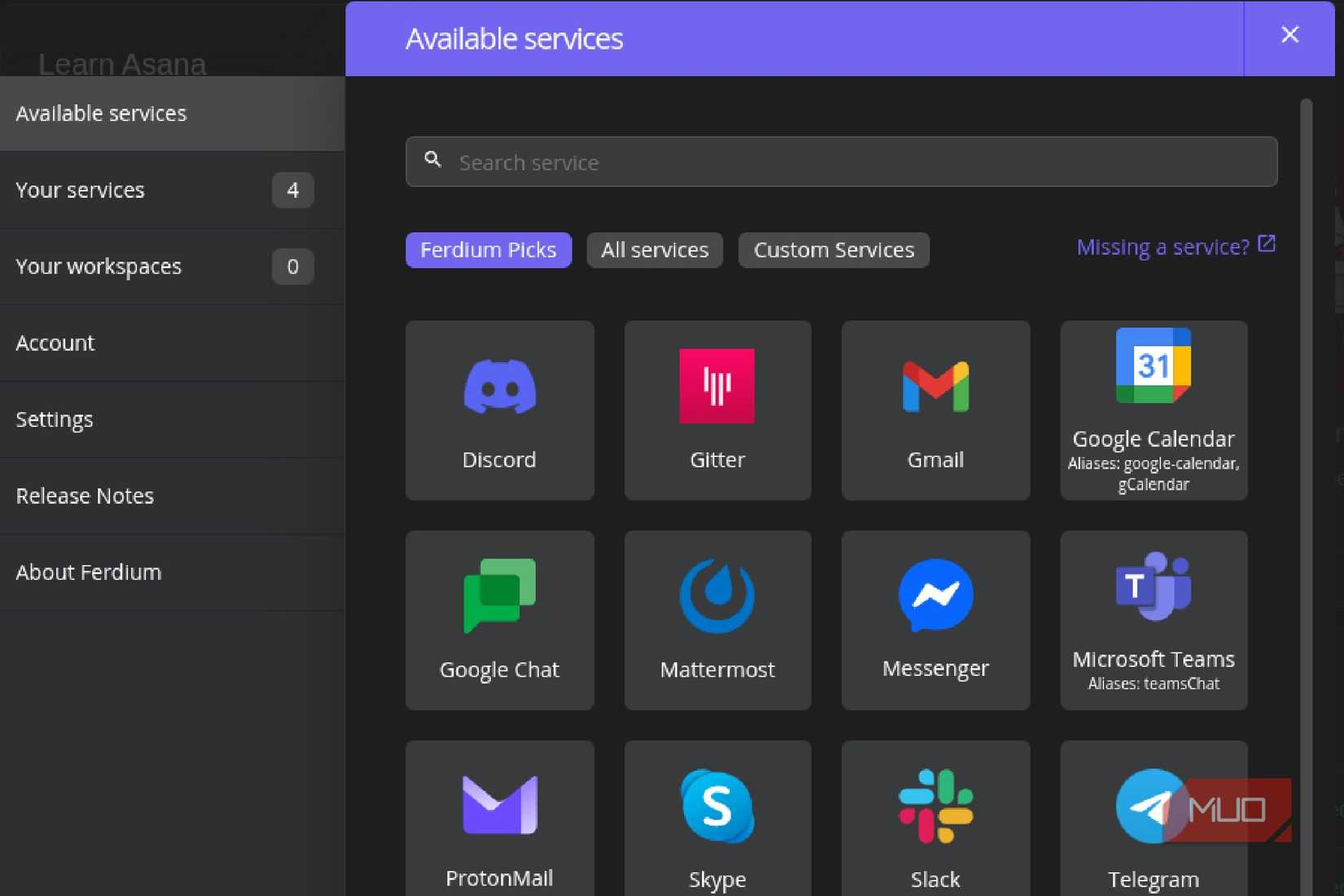
Ferdium does one thing, and it does it right. It’s a program that lets me consolidate a ton of different apps into one window, reducing tab clutter, native apps running in the background, and keeping all of my necessary “work” functions in one specific space. Rather than paging through different apps to get to what I need, I can simply hop into here, use Slack or Asana, and get right back to work. Seeing as, as of the time of this writing, the native apps are using 1.32 GB of RAM, Ferdium can help significantly lower that.
Another part of Ferdium that makes it better than some native apps? The fact that I can sign in to multiple accounts. Let’s say I have two different Slack profiles. Rather than logging in and out, I can switch between tabs and access each of my profiles in the same program. It saves time, effort, and looks fantastic while doing it. There are always plenty of ways to increase my productivity through the day, but this is helping to supercharge that.
If you’ve ever used a regular native app on your PC, you know that you’re more or less “confined” when it comes to customization. Apps like Discord offer a fair amount of customization within the application itself, including changing how your profile looks if you fork over some extra money per month. But if you want to set up specific workspaces for your personal and work life, you can’t do things like that. Ferdium, on the other hand, offers a ton of customization options and lets you create custom workspaces to separate your work and social life.
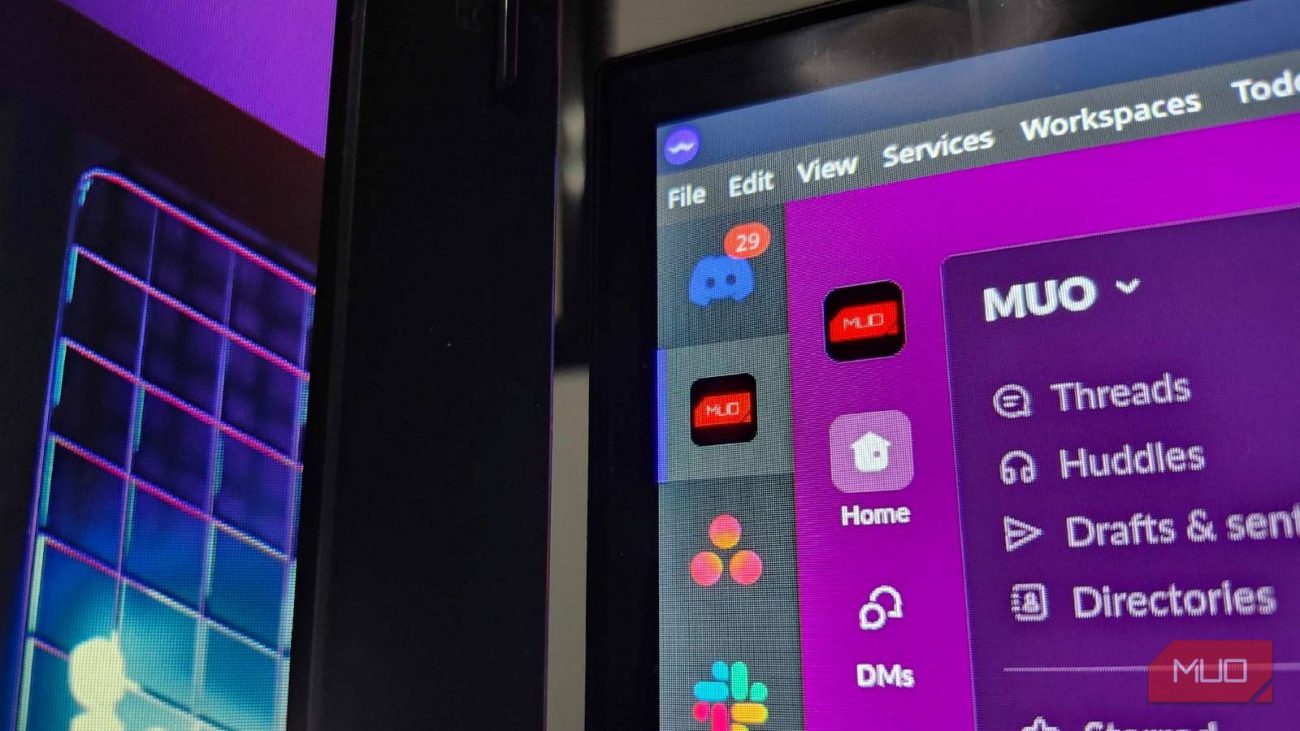
Seeing as I use Slack a ton during the workday, I’ve got my instances of that open, and I can also run Discord on the top or bottom. I get proper notifications for all of them, alongside notification bubbles in the corner of the screen if I’d like them. Keeping track of everything that I’m working on suddenly becomes much easier, because I’m not hopping between multiple open instances of each program to finally get to where I need to go. It’s incredibly useful, no matter how I’m planning on using it for the day. Especially since I can just keep Ferdium open on my second display, and have instant access to what I need.
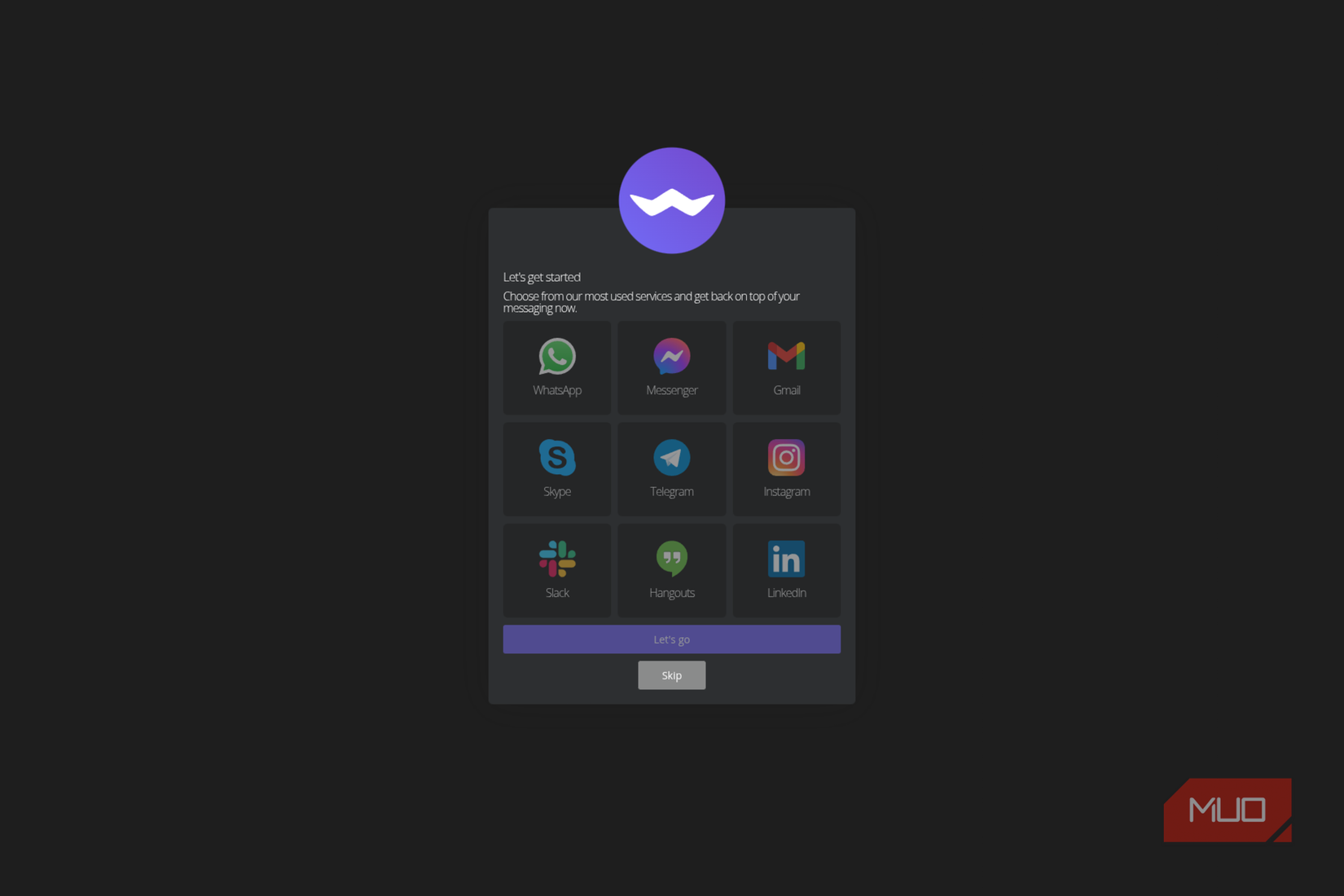
You may be confused the first time you log into Ferdium, as it will ask if you’d like to sign in with an account or proceed as a Guest. For an app that is all about services, settings, and workspaces being stored locally on your computer, it seems a little counterintuitive to log in with an account. Well, there are a few reasons why you can sign up for an account. If you have more than one PC that you use for Slack, Asana, Discord, etc., you can sign in with that account, and you can self-host and cloud sync all of your data.
Without an account, you can still access all of your favorite pages. Accounts aren’t needed here, but are nice to have if you’re planning on installing Ferdium on other devices in future. Encryption claims are slightly vague, as there is not any specific type of encryption actually mentioned on the GitHub page. But for those who are savvy enough to dive into the source code or set up a self-hosted instance, you can ensure your data is safe. Ferdium only saves login session cookies, not any of your passwords. Even then, it doesn’t upload them to any form of cloud-sync. So if you sync your data, you’ll need to re-log in to your applications on any device you use. Some may find this quirk to be annoying, but for the sake of privacy, I’m all for it. You can either use a Docker instance or set it up directly via Node.js, so choose the method you’d prefer and get ready to host.
Now, if you’re used to your apps being completely embedded into your OS, Ferdium may be a step backward for you. Why? Because it uses web-native applications, some applications may feel like a step down instead of going forward. While I don’t use Telegram myself, some users have reported that Telegram has several issues, alongside other messaging applications like WhatsApp. However, since I’ve been using it on Slack, Asana, and Discord personally, I haven’t run into any major issues compared to using the native apps that were available to download.
Apps like Gmail, Notion, Trello, Google Drive, Outlook, or any that have similar native/web applications have very little to no issues during the transfer. But if you’re a Telegram power-user or a WhatsApp fanatic, this may come with some significant drawbacks. Test it out for yourself and see if you like how it works. If you don’t like it? You can always uninstall it, and not have to worry about any of your passwords being tossed out into the void. You may also need to log in manually, instead of selecting to sign in via Gmail or other email applications, as it can flag the browser as being “suspicious”. This is primarily an Electron issue, and with how the app itself is built. Thankfully, you don’t need to worry about your credentials going missing, since the app only stores your login session cookies and no credentials.
I’m surprised it took me this long to discover that Ferdium exists, especially seeing as I’m constantly searching for new ways to get my productivity to new levels. Now that I don’t need to fret about having a ton of different applications open all the time, swapping between them is easier than I could have ever imagined, I’m feeling like I’m on cloud 9 when it comes to getting things done faster and more efficiently. If you find yourself flipping through different pages as I do? I would strongly suggest checking it out to see if it makes your life better, as it did for me.
